Dangerous Tree Removal Checklist: Managing Risk
Dangerous Tree Removal Checklist: How to Identify and Manage High-Risk Hazards
What if the most serious threat to your home isn't the leaning oak you've been watching, but the upright maple that looks perfectly healthy? It's a sobering thought for any property owner. Most people assume a tree will give a clear warning before it fails, but professional dangerous tree removal often starts with identifying defects that the untrained eye simply can't see. Is your tree actually a hazard, or are you just being cautious? It's a question we hear every day, and the answer usually lies in the details.
We understand the anxiety that builds when a storm rolls in and the wind starts to howl through the branches. You want to keep your property safe, yet you're likely worried about the potential costs or whether a beloved tree can actually be saved. You're not alone in that uncertainty. This guide will teach you how to spot invisible tree defects and follow a professional safety checklist to protect your property from catastrophic tree failure. We'll walk through the specific red flags of structural decay, explain how to evaluate potential targets, and help you decide when it's time to call for expert help or a specialized pruning service.
Key Takeaways
- Learn the simple formula to determine if a tree is a true hazard based on its structural defects and proximity to "targets" like your home or power lines.
- Discover how to conduct a systematic 5-zone inspection to identify subtle warning signs like basal rot, fungal growth, and soil heaving.
- Understand how local environmental stressors, including high-velocity winds and drought, can cause even seemingly healthy limbs to fail unexpectedly.
- Identify when a situation requires professional dangerous tree removal and why specialized equipment like cranes and rigging is essential for a safe outcome.
- Follow a clear action plan for immediate hazard mitigation to protect your property while waiting for a professional assessment from a local expert.
Table of Contents
- What Defines a Dangerous Tree? The "Defect + Target" Formula
- The 5-Zone Inspection Checklist: Spotting Danger Before It Drops
- Temple City Environmental Triggers: Why Local Trees Fail
- Why DIY Dangerous Tree Removal is a High-Stakes Gamble
- Taking Action: Professional Hazardous Tree Management
What Defines a Dangerous Tree? The "Defect + Target" Formula
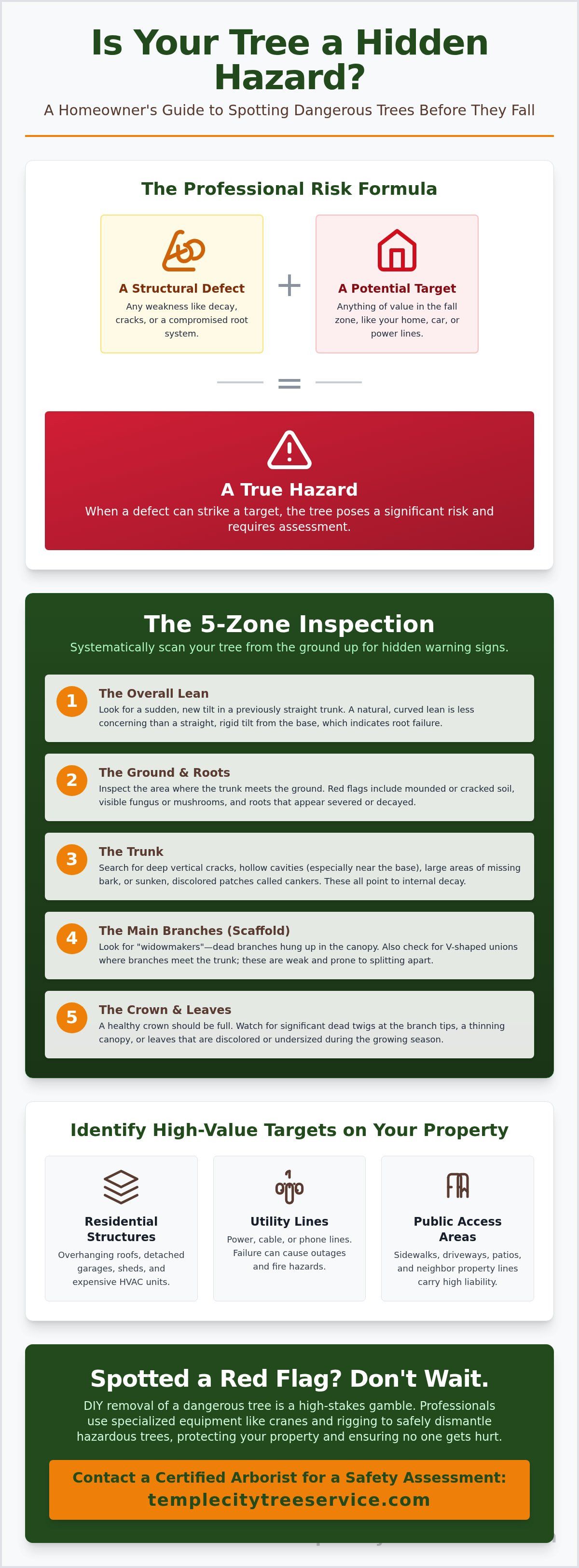
A tree isn't necessarily a hazard just because it's old or leaning. In the world of professional tree care, we use a specific formula to determine risk: Defect + Target = Hazard. Think of it this way. A dead tree in the middle of a remote forest isn't dangerous; it's simply part of the ecosystem. However, that same tree becomes a candidate for dangerous tree removal the moment it stands within reach of a bedroom, a parked car, or a busy sidewalk. Without a "target" to hit, there is no hazard. When a high-value target is present, even a single failing limb can lead to a catastrophe.
Many homeowners believe that as long as a tree has green leaves, it's safe. This is a dangerous misconception. Biological health and structural integrity are two very different things. A tree can be full of lush, green foliage while its interior is hollowed out by decay or its root system is compromised by fungus. These "invisible" defects are often what lead to unexpected failures during mild storms. Understanding the state of hazard trees requires looking beyond the leaves and examining the "bones" of the tree itself. If you're aware of a structural defect and choose to ignore it, you may face significant legal liability for any "known hazards" that eventually cause property damage or injury.
The Anatomy of a High-Risk Tree
Identifying a high-risk tree starts with understanding its "fall zone." This is the area where the tree or its branches would land if they failed. As a general rule, the fall zone is at least 1.5 times the total height of the tree. We look for structural issues like V-shaped crotches, where two trunks compete for space and eventually wedge each other apart. We also check for "included bark," which prevents the tree from forming a strong physical bond at these joints. While the tree might look biologically healthy, these structural flaws mean it's only a matter of time before gravity takes over. A hazardous tree is a combination of structural failure potential and proximity to a high-value target.
Common "Targets" on Temple City Properties
In our local neighborhoods, the density of structures means almost every large tree has a potential target. We frequently evaluate trees based on their proximity to the following:
- Utility Lines: Trees growing into power lines or municipal easements can cause fires or widespread outages during a failure.
- Residential Structures: Branches overhanging roofs, expensive HVAC units, or detached garages are high-priority risks.
- Public Access Points: Trees near public sidewalks, driveways, or neighbor property lines carry the highest liability if they fail.
By identifying these targets early, you can prioritize dangerous tree removal before a Santa Ana wind event or a heavy rain makes the decision for you. It's about being proactive rather than reactive.
The 5-Zone Inspection Checklist: Spotting Danger Before It Drops
How do you know when a tree has transitioned from a backyard asset to a liability? While the "Defect + Target" formula we discussed earlier provides the framework, a systematic inspection is what puts that theory into practice. Walking your property after a storm or during a seasonal change is often the first step in a successful dangerous tree removal strategy. By breaking the tree down into five distinct zones, you can spot subtle warning signs before they escalate into an emergency. If you're unsure where to start, you can Identify & Assess Hazard Trees by following this professional checklist.
- Zone 1: The Overall Lean. Look for a straight trunk that is suddenly tilting. Natural leans usually have a curve as the tree grows toward the light, but a straight tilt suggests the roots are lifting.
- Zone 2: The Ground and Roots. Inspect the "root flare" where the trunk meets the soil. Cracked soil or mounded earth on the side opposite a lean is a major red flag.
- Zone 3: The Trunk. Search for deep vertical cracks that go through the bark and into the wood. Hollow cavities or "cankers" (sunken areas of bark) often indicate internal decay.
- Zone 4: The Scaffold Branches. These are the primary limbs. Look for "widowmakers," which are dead branches hanging precariously in the upper canopy.
- Zone 5: The Canopy. Check for lopsided growth or "dieback," where the tips of the branches are leafless while the rest of the tree is green.
This systematic approach is critical for determining if you need dangerous tree removal or just routine maintenance. If you notice issues in more than two zones, it's time to consider scheduling a professional tree inspection to ensure your property remains safe.
Root and Soil Indicators
Roots are the anchors of your tree, but they're often the most overlooked part. Signs of root decay include fungal conks or mushrooms growing directly out of the base of the trunk. These aren't just surface-level growths; they signal that the structural heartwood is being consumed by fungi. Soil heaving is another critical emergency. If the ground is physically rising on one side of the tree, the root system is failing. This often happens after recent construction damage, where trenching or paving has severed critical roots, leading to a silent and steady decline.
Trunk and Branch Vulnerabilities
The way a tree's branches are attached determines its strength. We look specifically for "V-shaped" crotches, also known as co-dominant stems. These junctions are significantly weaker than "U-shaped" junctions because they lack a strong physical bridge of wood. Over time, bark grows between the stems, acting like a wedge that eventually splits the tree in half. Internal decay can be harder to spot, but sunken bark or "bleeding" sap often indicates an active infection. Brittle, bark-less limbs in the upper canopy are clear signs of deadwood that could drop without warning during the next high-wind event.
Temple City Environmental Triggers: Why Local Trees Fail
Have you ever wondered why a tree looks perfectly fine on a Tuesday but ends up on a roof by Wednesday night? In Temple City, the answer is usually found in our unique climate. While national articles often focus on snow loads or ice storms, our local trees face a completely different set of stressors. From the relentless heat of July to the fierce winds of November, our environment dictates when a tree becomes a hazard. Recognizing these triggers is the best way to avoid a sudden dangerous tree removal situation. It's not just about the age of the tree; it's about how that tree interacts with the California elements.
The San Gabriel Valley is home to specific pests that compromise structural integrity from the inside out. The Polyphagous Shot Hole Borer is a primary culprit. These tiny beetles tunnel into the wood and introduce a fungus that disrupts the tree's ability to transport water. This doesn't just kill the tree; it makes the wood incredibly brittle and prone to shattering. When you combine this internal damage with our rare but intense rainstorms, you get a recipe for disaster. Heavy rains saturate the soil, making it soft and heavy. For shallow-rooted species, this loss of "grip" often leads to the entire tree uprooting without any warning at all.
The Impact of Santa Ana Winds
The Santa Ana Wind Factor is perhaps our most significant seasonal threat. These high-velocity gusts turn minor defects into major failures in a matter of seconds. We often talk about the "Sail Effect" during our inspections. A thick, unpruned canopy acts exactly like a sail on a boat. When 60-mile-per-hour gusts hit a dense canopy, the wind cannot pass through the branches. This creates immense leverage on the trunk and root system. This is why requests for emergency tree services always spike during the fall and winter wind seasons. Preventative thinning is the best solution, as it allows the wind to blow through the canopy rather than pushing against it.
Drought and Pests in Southern California
Drought stress is a silent killer that leads to a phenomenon known as "Summer Branch Drop." During extreme heat, a tree may suddenly shed a large, seemingly healthy limb to conserve moisture. It's a survival mechanism for the tree, but it's a nightmare for anyone parked underneath. California's cycle of extreme drought followed by heavy rain is the primary driver of unexpected tree failure. Prolonged dry spells cause the root system to shrink and pull away from the soil, leaving the tree unstable. When the tree is already stressed, it becomes a magnet for secondary infections and wood-boring beetles, which further hollow out the structure. If you suspect your tree is struggling with the heat, it's wise to consider dangerous tree removal before the next wind event tests its strength.
Why DIY Dangerous Tree Removal is a High-Stakes Gamble
Is saving a few hundred dollars worth risking your home or your life? It's a question many homeowners ask when they see a dead limb or a leaning trunk. While the DIY spirit is strong in Southern California, dangerous tree removal is one area where amateur enthusiasm often leads to a catastrophe. Trees are massive, complex organisms. A single medium-sized oak limb can weigh over 500 pounds. When that weight is combined with height and gravity, the physics of falling timber becomes incredibly unpredictable. You might think you've aimed the fall perfectly, but internal rot or a sudden gust of wind can send several tons of wood crashing through your roof instead of onto the lawn.
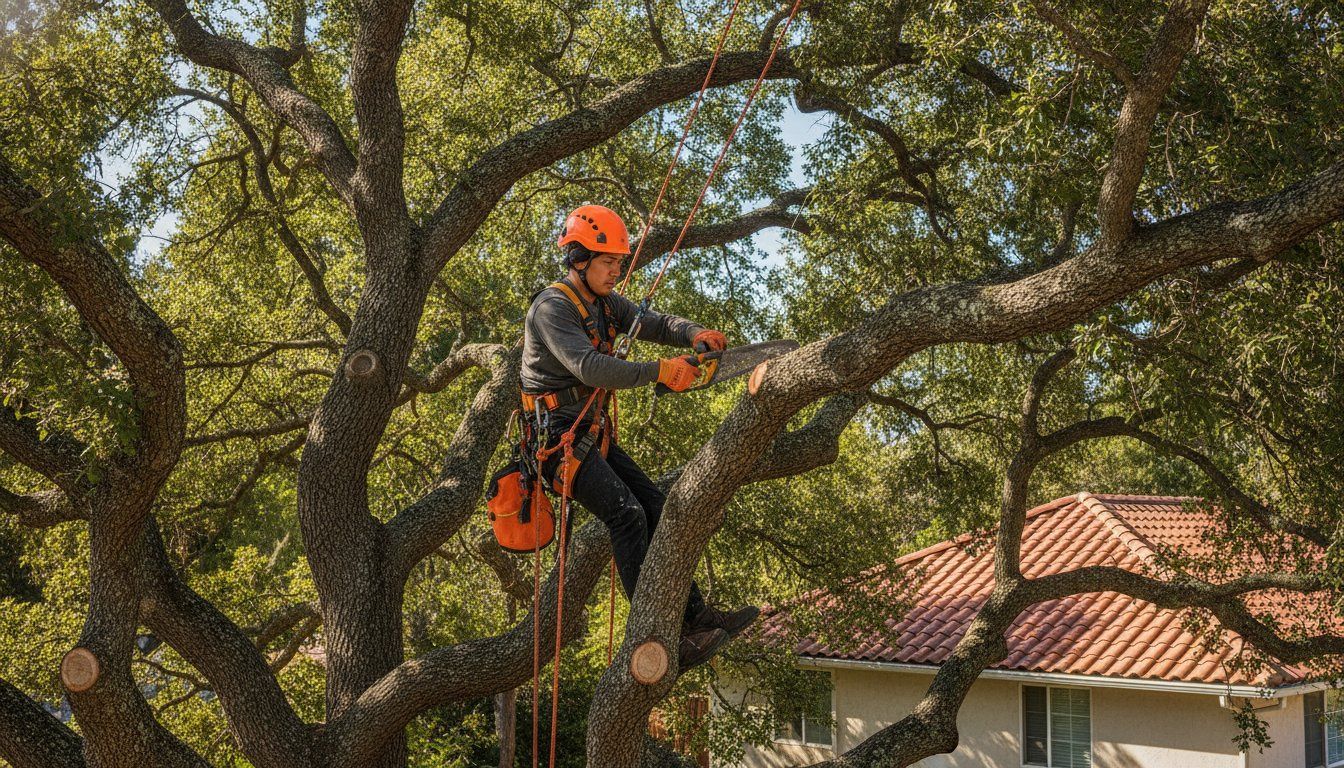
Professional teams don't just show up with a chainsaw. We use specialized equipment like cranes, rigging systems, and aerial lifts to dismantle a tree piece by piece. This controlled approach is the only way to manage high-risk hazards safely. Without the right gear, you're essentially guessing where the weight will shift. If you're facing a complex situation, it's always safer to schedule a professional tree removal than to take the risk yourself. Precision is the difference between a successful project and a disaster.
The Danger of "Hanger" and "Widowmaker" Branches
Working around "hangers" or "widowmakers" is particularly perilous. These are branches that have already broken but remain caught in the canopy. They are often under immense tension. In the industry, we call these "springpoles." If you cut the wrong spot, that branch can snap back with enough force to be lethal. There's also the risk of indirect contact with power lines. You don't actually have to touch a wire for it to be dangerous. Electricity can "arc" or jump to your tools or a wet branch; this turns a simple prune into a life-threatening event. Professional rigging is the only safe way to lower limbs that overhang structures or utilities.
The True Cost of Amateur Mistakes
The financial risks of DIY work are just as steep as the physical ones. Most homeowner insurance policies have specific exclusions for damage caused by non-professional tree work. If you drop a tree on your neighbor's garage, you could be personally liable for every cent of the repairs. This is also why hiring "cheap" unlicensed labor is a major mistake. If an uninsured worker gets hurt on your property, you're the one left holding the legal and financial responsibility. The initial savings of a DIY job quickly vanish when compared to the cost of a structural repair or a legal battle. Real value comes from knowing the job is done right the first time.
Taking Action: Professional Hazardous Tree Management
Once you've used our 5-zone checklist and determined a tree is a threat, the focus shifts to mitigation. What is the first thing you should do? Start by clearing the fall zone. Move patio furniture, vehicles, and potted plants away from the tree's reach. Keeping family and pets away from the area is a simple but vital step in protecting your household. After the immediate area is secure, the next logical step is to schedule a professional assessment. A local expert can confirm your findings and determine if dangerous tree removal is the only option or if structural pruning could mitigate the risk.
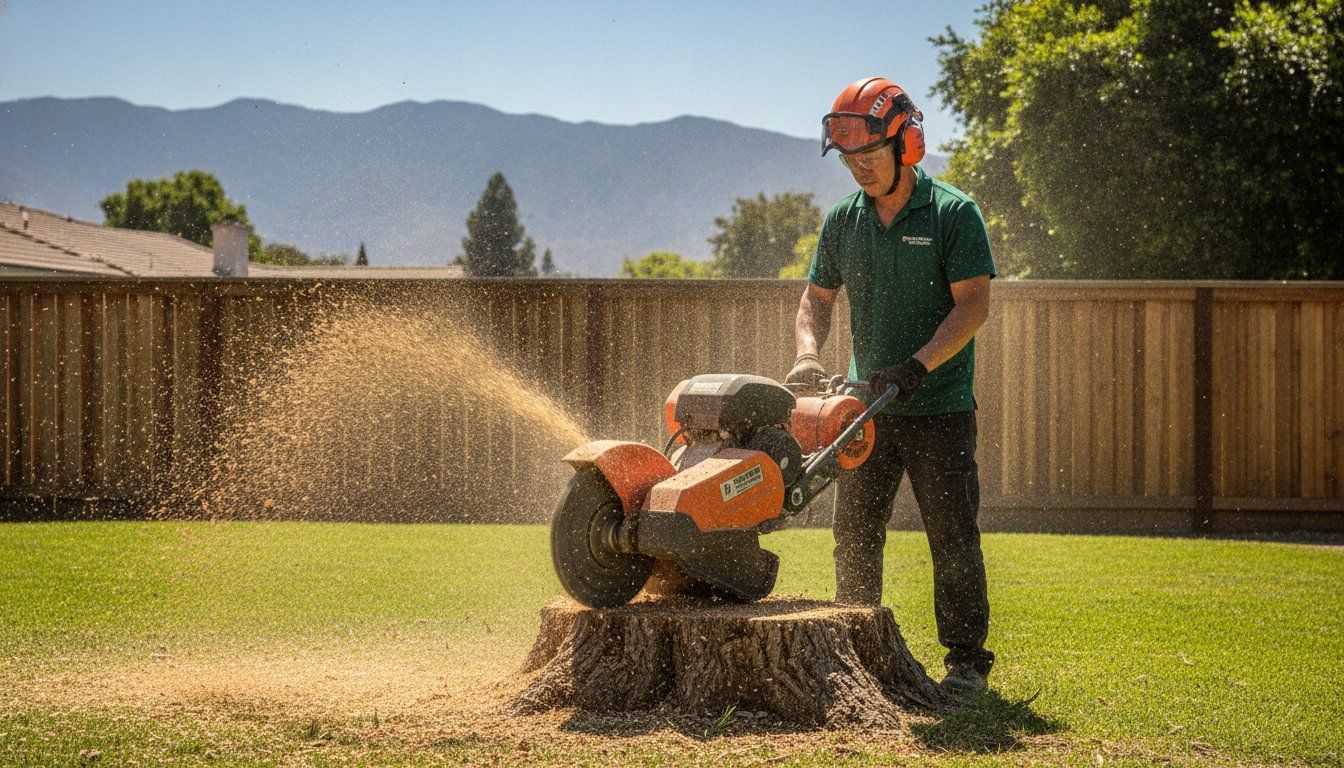
Navigating the legal side of tree work is equally important. In Temple City, specific local ordinances govern the removal of protected species or trees of a certain size. Failing to obtain the correct permits can lead to significant fines. We help you understand these local requirements to ensure everything is done by the book. Once the paperwork is in order, the execution must be flawless. We use sectional dismantling and advanced rigging to lower heavy limbs slowly. This controlled approach prevents impact damage to your lawn and surrounding structures. After the tree is safely on the ground, we complete the job with stump grinding and site restoration, leaving your property safe and ready for a new landscape.
What to Expect from a Professional Removal
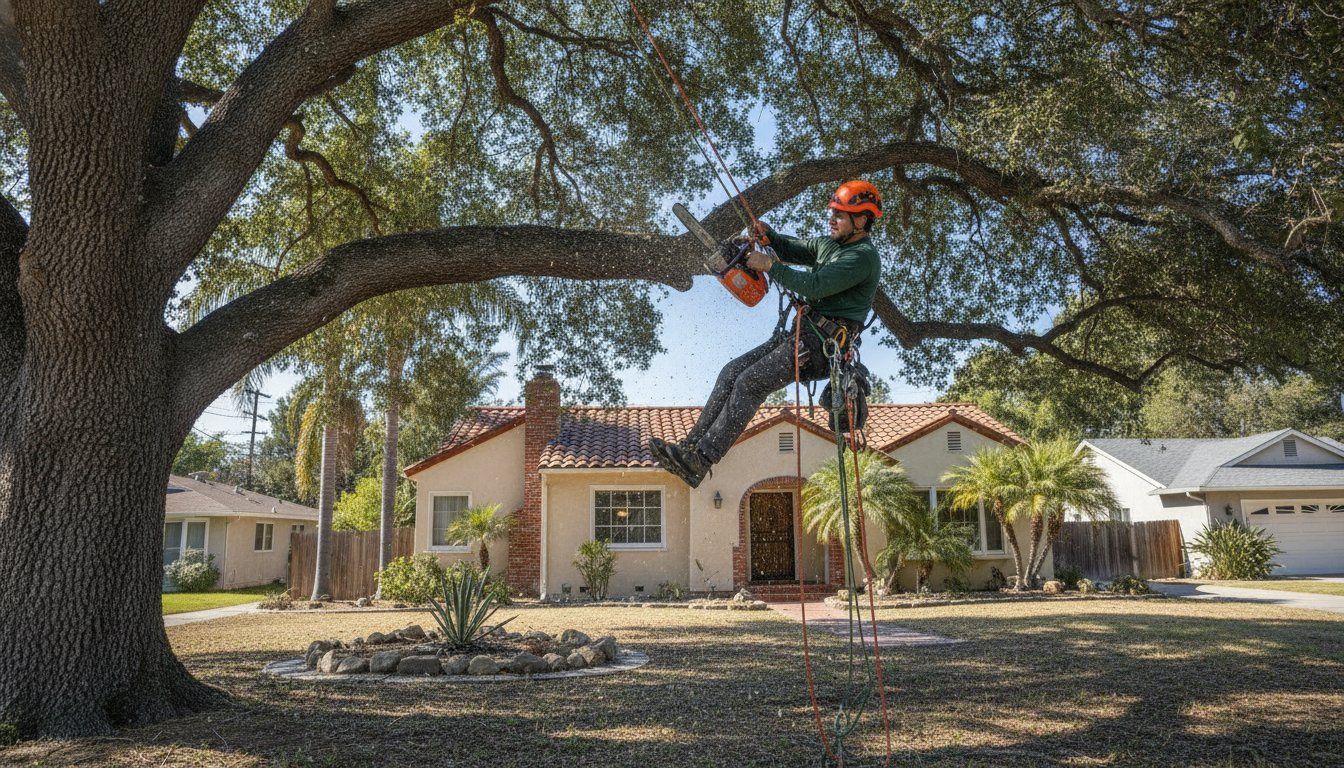
When our team arrives, you'll see a methodical operation designed for maximum safety. We don't just "fell" a tree in a residential backyard. Instead, we use sectional dismantling. This involves removing the tree piece-by-piece, starting from the top. Ground crews use high-strength ropes to guide each limb away from your roof or fence. Our safety protocols are rigorous. Every team member wears full PPE, and we use clear flagging to keep the work zone secure. Once the cutting is finished, our efficient wood chipping services turn the debris into mulch, which we haul away to leave your yard spotless.
Partnering with Temple City Tree Service
We take immense pride in being a trusted local expert for our neighbors. Our commitment to property safety means we prioritize rapid response times for high-risk situations. Whether you have a massive oak leaning toward your power lines or a drought-stressed maple dropping limbs, we have the specialized rigging and experience to handle it. We understand the unique challenges of Temple City's environment and the specific needs of our local urban forest. You don't have to manage these risks alone. Precision, safety, and community care are at the heart of everything we do. Don't wait for the next storm. Contact Temple City Tree Service for a safety inspection today and get the peace of mind you deserve.
Protecting Your Home Before the Next Storm
Managing a hazardous tree can feel overwhelming, but you've already empowered yourself by learning the warning signs. From the roots to the canopy, you now know how to spot the defects that turn a beautiful tree into a liability. While a systematic inspection gives you clarity, successful dangerous tree removal requires the precision and specialized gear that only a seasoned professional can provide. It's about protecting your biggest investment with the right tools and techniques.
Our team offers extensive local Temple City expertise to help you navigate these high-stakes decisions. We pride ourselves on being a dependable partner for our neighbors, offering everything from emergency storm damage response to routine safety evaluations. You can trust our fully insured and licensed crews to handle the heavy lifting while you focus on enjoying your outdoor space. Don't let a "what if" keep you up at night during the next windstorm.
Request a Professional Hazard Assessment from Temple City Tree Service today. Taking these proactive steps is the best way to ensure your property stays safe and your landscape continues to thrive.
Frequently Asked Questions
Is a leaning tree always dangerous?
A leaning tree is not always a hazard. Many trees grow at an angle to find sunlight, resulting in a curved trunk that is perfectly stable. You should only worry if the lean is new, the trunk is straight, or you see mounded soil and cracked earth on the side opposite the lean. These are signs of root failure that require immediate attention to prevent a collapse.
How much does dangerous tree removal cost in Temple City?
The cost of dangerous tree removal depends on the size of the tree, its location, and the equipment required for a safe operation. Factors like proximity to energized power lines or overhanging rooflines increase the complexity of the job. Since every situation is unique, we provide a detailed assessment to determine the most efficient and safest path forward for your specific property.
Can a hazardous tree be saved with pruning instead of removal?
Pruning can often mitigate risks without the need for a full removal. By removing deadwood or thinning the canopy to reduce wind resistance, we can sometimes stabilize a tree that would otherwise be a hazard. However, if the primary trunk has significant internal decay or the root system is compromised, removal is usually the only way to ensure long-term safety for your home.
Does my homeowners insurance cover dangerous tree removal?
Most homeowners insurance policies don't cover the cost of removing a standing tree, even if it is dead or leaning. Insurance is designed to cover sudden and accidental damage, meaning they usually only pay once a tree has already fallen on a covered structure. Preventative maintenance is typically the responsibility of the property owner, so it's best to address hazards before a storm arrives.
Do I need a permit to remove a dangerous tree on my property?
You often need a permit to remove a tree in Temple City, especially if it's a protected species like an Oak or Sycamore. Local ordinances are strict about canopy preservation, but exceptions are frequently made for trees that pose an imminent threat to life or property. We can help you navigate the permitting process and ensure all local environmental regulations are followed during the dangerous tree removal.
What are the signs of internal tree rot?
Internal rot often reveals itself through external signals like fungal mushrooms growing at the base or cankers on the trunk. You might also notice hollow cavities where animals are nesting or sap that appears to be bleeding from the bark. These signs indicate that the structural heartwood is breaking down, which significantly increases the risk of a sudden failure during high winds.
How close to my house is a tree considered dangerous?
A tree is considered a potential threat if it stands within its fall zone, which is generally 1.5 times the height of the tree. Even if a tree is thirty feet away, a sixty-foot tall specimen can still reach your roof or power lines. Proximity to high-value targets like your house, driveway, or neighbor's property is what transforms a structural defect into a high-risk situation.
What should I do if a neighbor’s tree looks like it might fall on my property?
If a neighbor's tree appears hazardous, the first step is to have a neighborly conversation about your concerns. If the situation isn't resolved, you might need a professional assessment to document the hazard. Under California law, property owners can be held liable for damage caused by known hazards they failed to address, so having a professional record of the risk is a vital protective step.