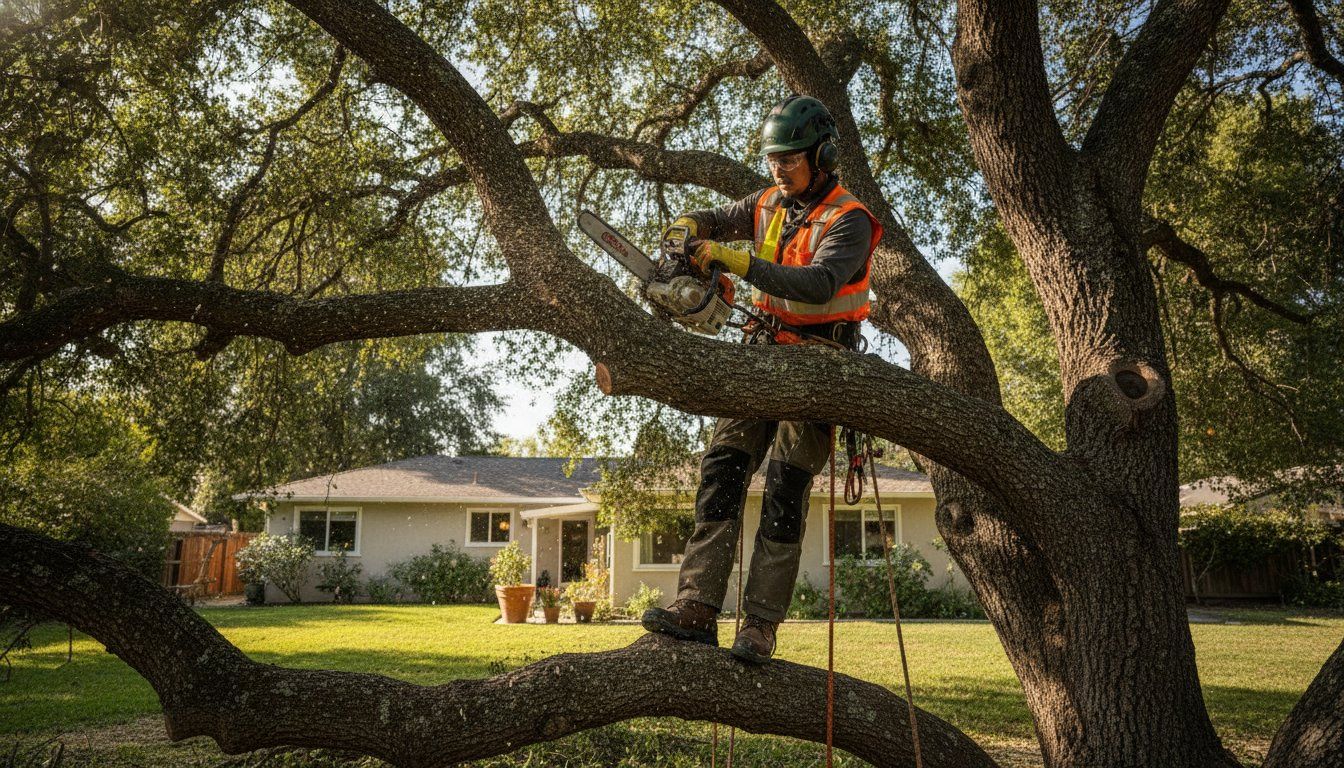
Tree Crowning: Homeowner's Guide to Canopy Care
Professional Tree Crowning Service: A Homeowner’s Guide to Canopy Care in 2026
Imagine lying in bed during a Southern California windstorm, listening to the rhythmic scrape of a heavy branch against your shingles. It's a sound that keeps you awake, isn't it? You likely value the character your trees add to your property, yet you worry about the risks they pose when left unmanaged. You aren't alone in wanting to reclaim your garden's sunlight without sacrificing the tree itself. This is where a professional tree crowning service becomes essential for maintaining that delicate balance between structural safety and natural beauty.
We understand that your home is your sanctuary, and the last thing you want is a falling limb or a blocked view. You'll discover how expert crowning manages height and density to protect your roof and improve tree health. We will walk you through the professional standards for 2026, explain the difference between proper reduction and harmful topping, and show you how to achieve a well-shaped canopy that stands strong against the elements. By the end of this guide, you will have the confidence to make the best decisions for your property's long-term safety.
Key Takeaways
- Learn why a professional tree crowning service is the safest way to manage height and density without risking the long-term health of your canopy.
- Understand the critical differences between surgical crown reduction and the destructive practice of "tree topping," which often leads to sunscald and starvation.
- Discover how crown thinning techniques can restore sunlight to your garden and improve airflow through dense branches.
- Identify the specific signs that your Temple City property needs canopy care, especially if you have overgrown Oaks or Sycamores near your roofline.
- Gain insight into how a professional evaluation ensures every cut is made with precision and structural safety in mind.
Table of Contents
- What is a Tree Crowning Service and Why Does it Matter?
- The 3 Primary Methods of Crown Management
- The Danger of 'Tree Topping' vs. Professional Crowning
- When Does Your Temple City Property Need Crowning?
- Choosing Temple City Tree Service for Your Canopy Care
What is a Tree Crowning Service and Why Does it Matter?
Have you ever looked up at a massive Sycamore or Oak in your yard and felt a mix of admiration and slight anxiety? It's a common feeling for homeowners in Temple City. While we love our urban forest, a tree that grows too tall or too dense can quickly become a liability. A professional tree crowning service is the solution that bridges the gap between preserving nature and protecting your property. It’s about more than just aesthetics; it's about structural integrity.
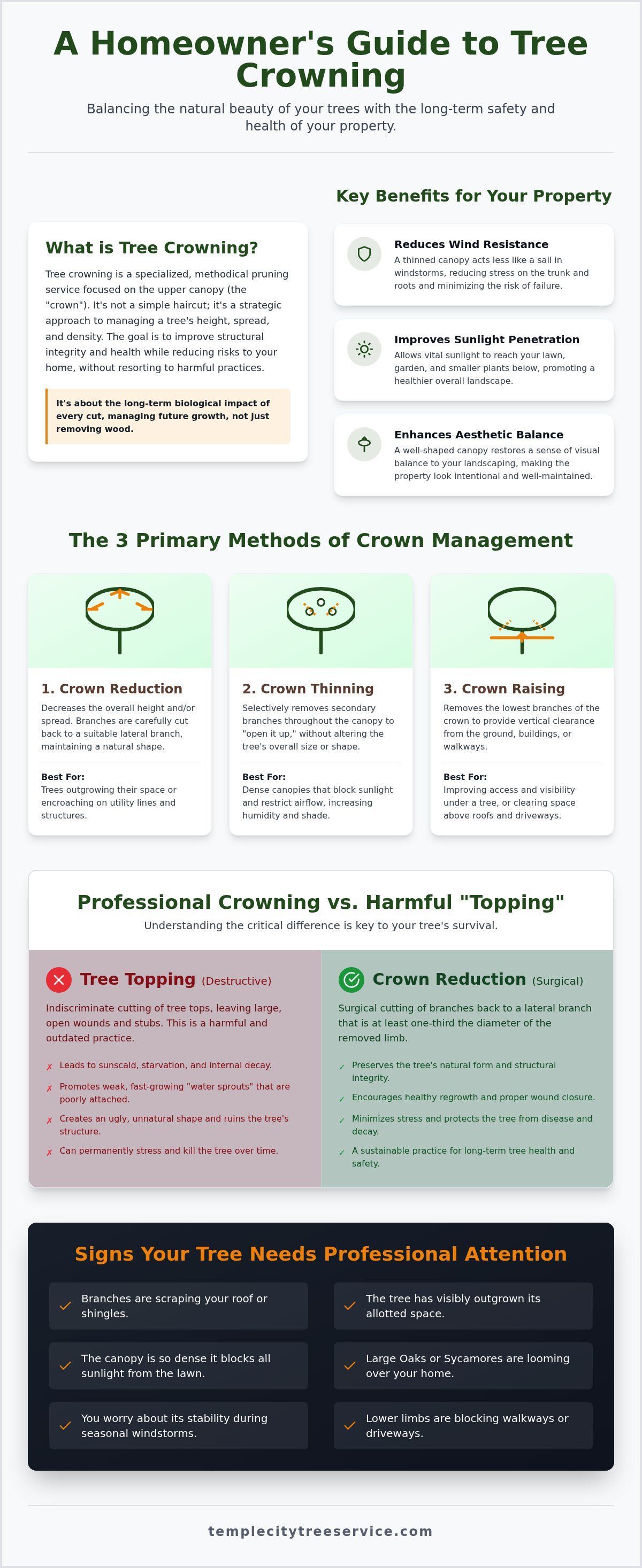
This specialized technique focuses entirely on the upper canopy, or the "crown," of the tree. It isn’t just a simple haircut. Instead, it’s a methodical approach to managing the height, spread, and density of the branches. By utilizing various methods of crown management, specialists ensure your tree remains healthy while reducing the physical footprint it occupies in your sky. Strategic crowning differs from basic trimming because it considers the long-term biological impact of every single cut. We don't just remove wood; we manage the tree's future growth patterns.
The Biology of the Tree Crown
Think of your tree's canopy as its primary energy factory. Through photosynthesis, the leaves in the crown convert sunlight into the fuel the tree needs to survive. Beyond just feeding the tree, this thick layer of foliage acts as a natural air conditioner for your home. It provides shade that helps with thermoregulation during our hot California summers. However, balance is everything. If a service provider removes too much of the crown, they risk "starving" the tree or exposing the internal bark to sunscald. This often leads to internal branch death and decay, which creates the very hazards you were trying to avoid. Precision is the only way to protect that energy cycle.
Primary Benefits for Temple City Homeowners
Why should you consider a tree crowning service for your own yard? First, it significantly reduces wind resistance. During seasonal wind events, a dense canopy acts like a giant sail. It catches the wind and puts immense pressure on the trunk and roots. Crowning thins that "sail" so the wind passes through safely. Additionally, it allows much-needed sunlight to reach your lawn and smaller plants below. Finally, a well-crowned tree simply looks better. It restores a sense of aesthetic balance and "weight" to your landscaping, making your property look cared for and intentional.
The three Primary Methods of Crown Management
How do you know which approach is right for your property? It isn't a one-size-fits-all decision. A professional arborist looks at the tree species, age, and proximity to your home before recommending a specific tree crowning service. By using proper pruning techniques, we ensure the tree remains structurally sound while meeting your specific goals for clearance or light. Different species, like the sturdy Oaks or fast-growing Sycamores common in Temple City, respond uniquely to these methods. Choosing the wrong cut can lead to years of poor growth or even structural failure.
- Crown Reduction: This method decreases the overall height or spread of the canopy by cutting branches back to smaller lateral branches.
- Crown Thinning: We remove specific, secondary branches throughout the canopy to increase light penetration and reduce wind resistance.
- Crown Raising: This involves trimming the lowest branches to provide vertical clearance for sidewalks, driveways, or your home's roofline.
When to Choose Crown Reduction
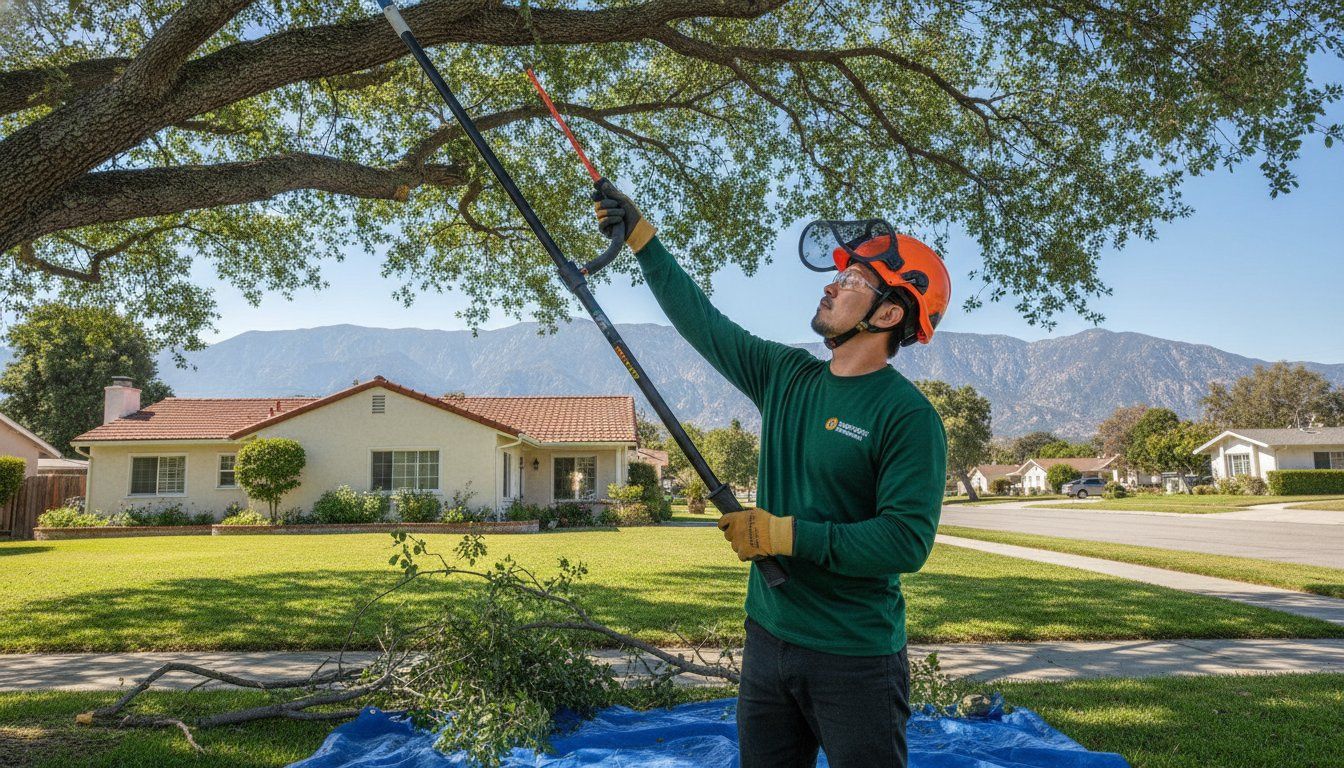
Crown reduction is often the best choice for trees that have outgrown their designated space or are encroaching on overhead utility lines. This method focuses on shortening branches back to "lateral" branches that are large enough to assume the terminal role. Crown reduction is the strategic shortening of branches to a growth point. It's a precise alternative to the harmful practice of topping. By maintaining a natural appearance, we help the tree stay healthy while keeping it away from your gutters and chimneys. If you've noticed branches scratching your shingles, this is likely the solution you need.
The Advantages of Crown Thinning
Is your lawn struggling because your tree blocks every drop of sunlight? Crown thinning is ideal for dense canopies that trap humidity and cast deep, dark shadows. This process maintains the tree's overall size but "opens up" the interior. It's a surgical approach that avoids "lion's tailing," which is a dangerous and improper technique that leaves too much weight at the ends of branches. Proper thinning allows the canopy to breathe. It helps prevent fungal issues and makes the tree much safer during high winds. You'll notice more light in your garden and a tree that looks lighter and more vibrant.
While reduction and thinning focus on the top, crown raising addresses the bottom. This is essential for safety and accessibility. Do you have guests ducking under branches on your walkway? Raising the crown creates a clear path for pedestrians and vehicles. It also improves air circulation around the trunk, which can prevent moisture-related rot. When we evaluate your property, we often find that a combination of these techniques provides the best results for both safety and beauty. If you aren't sure which method your tree requires, a quick consultation with a local expert can clarify the best path forward.
The Danger of 'Tree Topping' vs. Professional Crowning
Have you ever noticed a tree in your neighborhood that looks like its top was simply hacked off with a chainsaw? That is "topping," and it is a practice we strictly avoid. While some might offer it as a fast way to manage height, it's actually a death sentence for the tree. A legitimate tree crowning service focuses on long-term survival, whereas topping focuses on a temporary, dangerous shortcut. Using a professional tree crowning service ensures your tree's natural defense systems stay intact while still achieving the clearance you need.
Why is topping so harmful? First, it leaves the tree in a state of starvation. By removing the majority of the leaf-bearing crown, you strip away the tree's ability to produce food. Second, the large, flat wounds left behind are prone to sunscald and decay. The tree's natural defense systems are overwhelmed. This invites pests and pathogens directly into the heartwood. Topped trees often respond by growing "water sprouts." These are weak, spindly limbs that grow incredibly fast but have very poor structural attachment. They become high-risk hazards much faster than unpruned branches ever would. The liability trap is real; a topped tree is a falling hazard waiting for the next windstorm.
Identifying Improper Pruning Practices
You can spot improper pruning from a block away. Warning signs include trees with flat tops, large open wounds, and a sudden lack of leaf cover during the peak growing season. Many homeowners are lured in by "cheap" services that promise a quick fix for a low price. However, these jobs end up costing significantly more in the long run. You'll eventually face expensive removal costs or, worse, the liability of a falling limb damaging your home. It's much cheaper to do it right the first time than to pay for a mistake that ruins your landscaping.
The Professional Crowning Standard
Our team adheres to the ANSI A300 standards for tree care. This means every cut is intentional and based on the biological needs of the species. Proper reduction pruning preserves the tree's structure while achieving your height goals. One of our core rules is the "25% rule." We never remove more than a quarter of the canopy in a single season. This allows the tree to remain vigorous and healthy while we shape it. Professional crowning always leaves enough foliage for the tree to recover.
When Does Your Temple City Property Need Crowning?
Living in Temple City means sharing our neighborhoods with a beautiful, established urban forest. Since the city maintains a four-year pruning cycle for public trees, it's a helpful benchmark for your private property too. But how do you know when your specific tree is ready for a professional tree crowning service? Local species like our massive Coast Live Oaks, tall Aleppo Pines, and spreading Sycamores all have different growth rates and structural needs. Southern California's year-round growing season means canopies can become dense faster than you might expect, especially after a particularly wet winter.
The "sweet spot" for scheduling this work is typically late winter or early spring. During this period, most trees are dormant or just beginning their growth spurt. Pruning now allows the tree to heal quickly as the sap begins to flow. It also ensures your canopy is thinned and balanced before the summer heat and potential Santa Ana wind events arrive. If you wait until a storm is already hitting, you're dealing with an emergency rather than proactive care. Taking action early keeps your property safe and your trees vibrant.
Species-Specific Crowning Needs
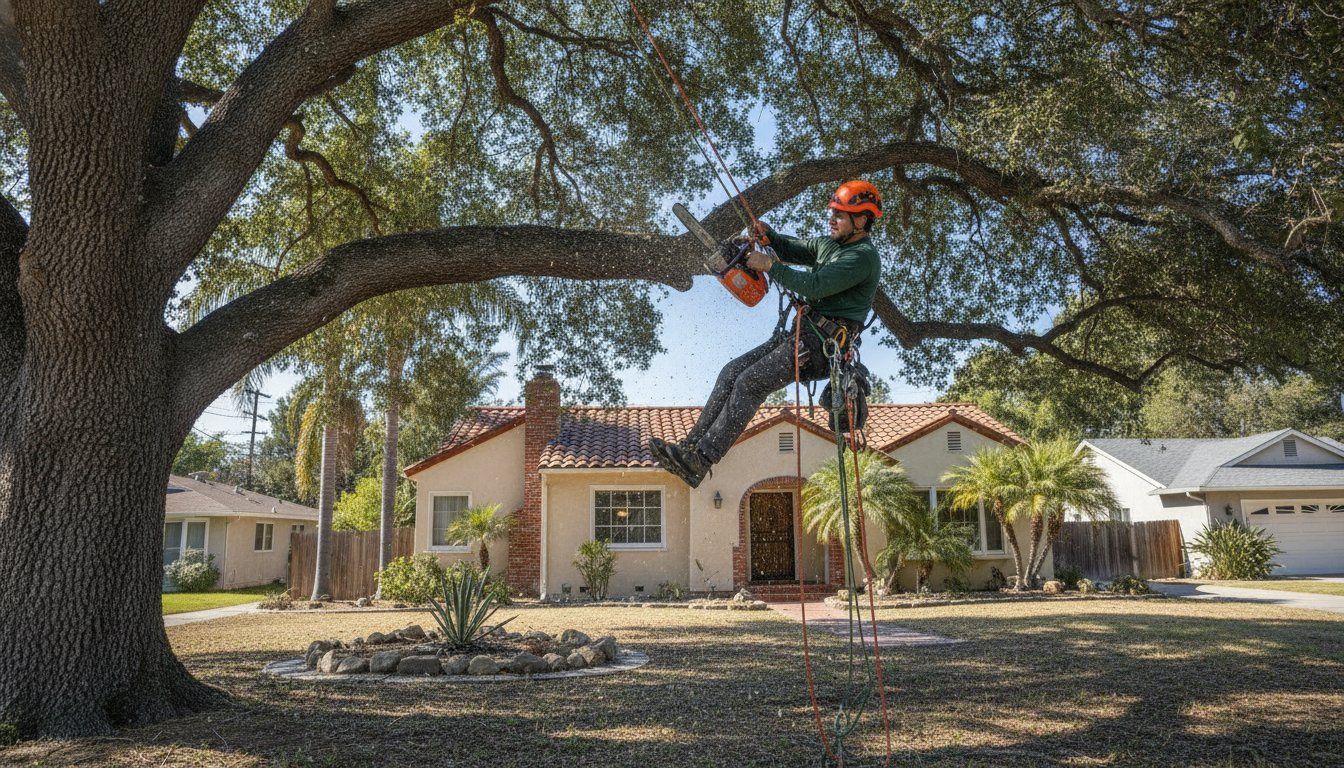
- Oak Tree Crowning: Mature Oaks often develop massive horizontal limbs that carry incredible weight. We focus on managing that leverage to prevent the limbs from snapping under their own pressure.
- Pine Tree Management: Tall pines act like a giant sail in the wind. Reducing the "sail effect" through crowning prevents the tree from toppling during high-wind events.
- Fruit Tree Crowning: For those with backyard citrus or stone fruit, we balance height to make harvesting easier and ensure sunlight reaches the interior for better fruit quality.
Signs Your Canopy is Overgrown
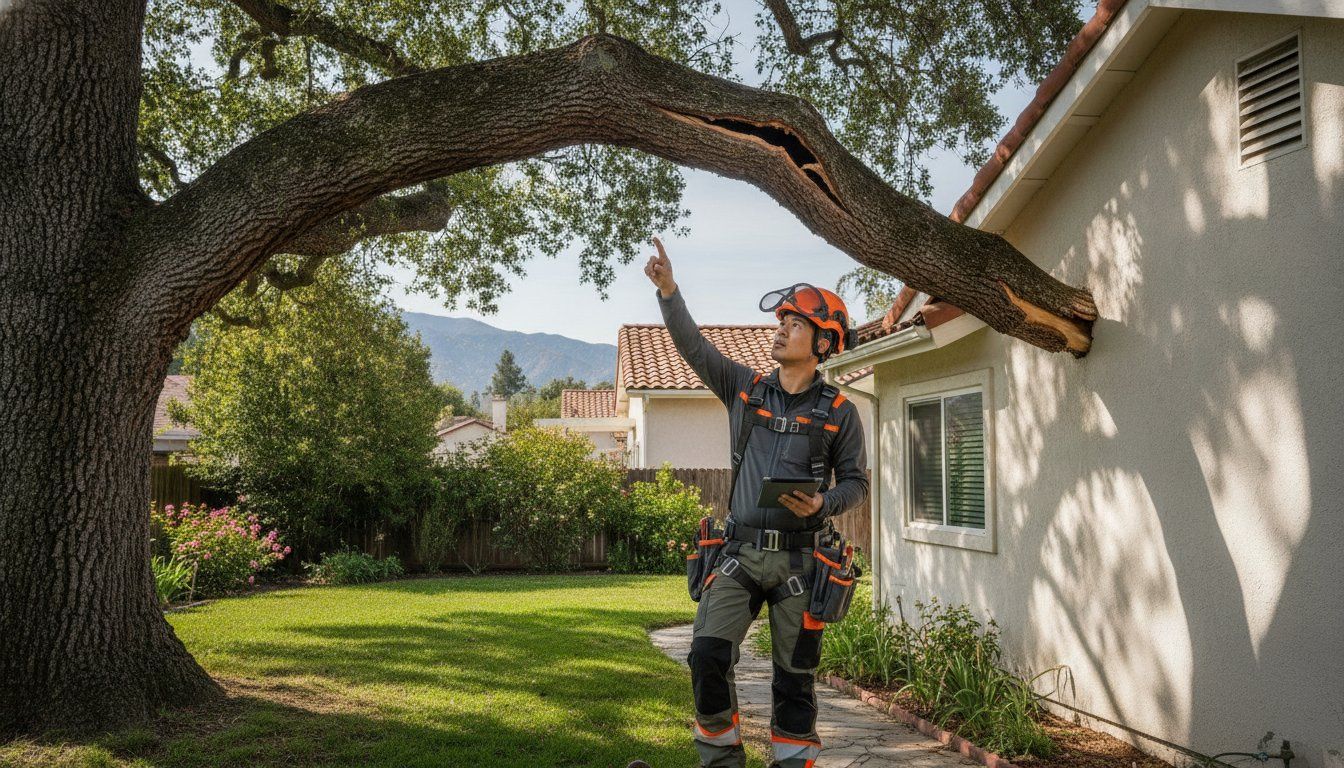
Is your roof starting to show signs of wear? Excessive shade from an overgrown canopy traps moisture against your home. This often leads to moss or mold growth on your shingles or in your gutters. You might also notice small pieces of deadwood falling frequently, even when there isn't a major wind event. These are clear signals that the tree is struggling to support its own mass. If the tree appears "top-heavy" or leans noticeably during a rainstorm, the structural integrity is already at risk. Don't wait for a branch to land on your chimney before taking action. If you've spotted these warning signs, it's time to schedule a professional tree inspection to protect your home and your landscape.
Choosing Temple City Tree Service for Your Canopy Care
Finding a partner to care for your landscape shouldn't be a stressful experience. When you're looking for a reliable tree crowning service, you need more than just someone with a saw. You need a specialist who understands the local ecosystem. We take immense pride in being that trusted neighbor for the Temple City community. Our approach combines professional authority with the personal touch of a local service provider. We don't just see a project; we see a long-term investment in your property's safety and curb appeal.
Every cut we make is backed by a commitment to precision. Why does this matter? As we discussed earlier, improper pruning can lead to a lifetime of structural issues. By choosing a local, insured expert, you gain the peace of mind that comes from knowing your home is protected. We follow strict safety protocols to ensure that your roof, gutters, and power lines remain untouched during the process. Our goal is to leave your yard looking better than we found it, with trees that are both beautiful and biologically sound. We treat your property with the same care we would our own.
Our Professional Crowning Process
We believe that a successful project starts long before the first branch falls. Our process is methodical and transparent, moving from a thorough identification of risks to a precise solution. We begin with a comprehensive visual inspection. During this phase, we look for signs of diseases, pests, or structural weak points that might not be visible to the untrained eye. Are there hidden pockets of decay? Is the weight distribution uneven? We answer these questions before we begin. This ensures that our tree crowning service addresses the root of the problem, not just the symptoms.
- Customized Pruning Plan: We tailor every project to your specific goals, whether you need more sunlight for your lawn or better clearance for your chimney.
- Species-Specific Care: We apply our knowledge of Temple City’s Oaks and Sycamores to ensure the pruning follows natural growth patterns.
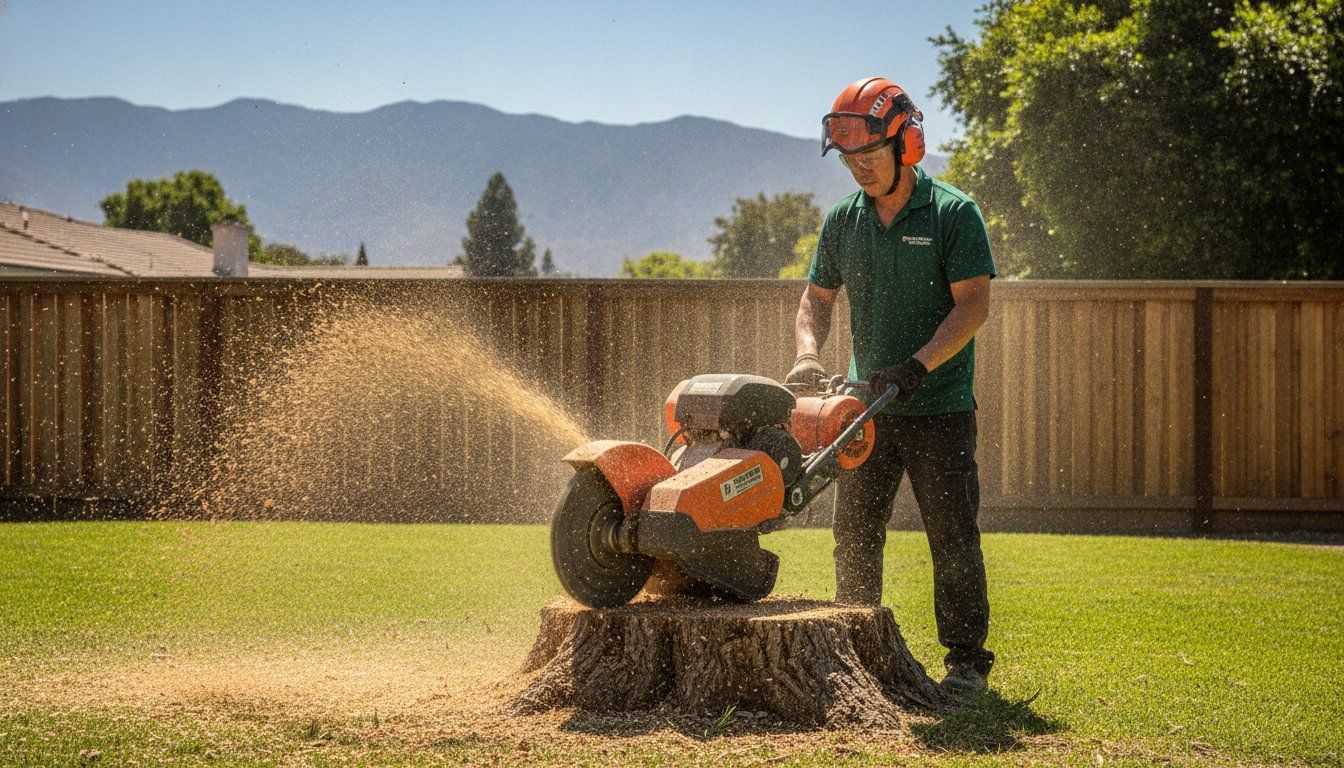
- Safe Debris Removal: Once the technical work is done, we handle all debris removal and site cleanup, leaving your property pristine.
Ready to Restore Your Tree's Beauty?
Waiting for a storm to identify a weak branch is a risky strategy. In many cases, proactive maintenance is far more affordable than emergency storm cleanup. By managing the height and density of your canopy now, you prevent the stress of falling limbs and property damage later. Are you ready to reclaim your garden's sunlight and ensure your home's safety? Our team is standing by to provide the expert guidance you need. We invite you to schedule your free tree crowning consultation today! Let's work together to keep your canopy healthy, safe, and stunning for years to come.
Secure Your Property and Enhance Your Canopy Today
Your trees are a vital part of your home's character and value. As we have explored, professional canopy management is about finding the perfect balance between structural safety and biological health. By choosing a specialized tree crowning service, you ensure that your Oaks, Pines, and Sycamores remain strong against seasonal winds while allowing natural light to reach your garden. You now know the critical difference between surgical reduction and the destructive practice of topping. This knowledge empowers you to protect your landscape from long-term damage and unnecessary liability.
At Temple City Tree Service, we combine expert tree trimming and pruning with a deep commitment to reliable workmanship. Whether you need a routine safety check or safe and efficient tree removal, our team is here to help you maintain a beautiful and secure environment. Don't wait for the next windstorm to test the strength of your overgrown branches. Take a proactive step toward a healthier landscape and more peace of mind.
Get a Free Tree Crowning Estimate from Temple City Tree Service and let our local experts restore the balance to your property. We look forward to partnering with you to keep Temple City's urban forest thriving for years to come.
Frequently Asked Questions
Is tree crowning the same as tree topping?
No, tree crowning is a surgical pruning technique that is vastly different from the harmful practice of topping. While topping involves cutting branches to stubs and often leads to tree death, a professional tree crowning service focuses on cutting back to lateral branches. This preserves the tree's health, natural shape, and structural integrity.
How much of the tree canopy can be safely removed at once?
Most industry standards recommend removing no more than 25% of the live canopy in a single season. Removing too much foliage at once can starve the tree of the energy it needs to survive. It also leaves the internal bark vulnerable to sunscald, which often leads to decay and long-term structural weakness.
What is the best time of year for a tree crowning service in Temple City?
Late winter or early spring is the ideal time for a tree crowning service in our local climate. Pruning while the tree is dormant allows for faster wound closure once the spring growth cycle begins. It also ensures your canopy is thinned and balanced before the high winds and summer heat arrive.
Can crowning help a tree that is leaning toward my house?
Yes, crowning can help by strategically redistributing the weight of the canopy. By selectively removing heavy limbs on the leaning side, we reduce the leverage and pressure on the trunk and root system. While it won't fix underlying root damage, it significantly improves the safety profile of a leaning tree.
Will crowning my tree help my grass grow better underneath?
Yes, specifically through a technique known as crown thinning. By removing selective secondary branches throughout the canopy, we allow more sunlight and airflow to reach your lawn. This increased light penetration is often exactly what struggling grass and understory plants need to thrive again.
How often should a mature tree receive a crowning or thinning service?
Most mature trees benefit from a professional assessment every 3 to 5 years. Since Temple City maintains its public trees on a 4-year pruning cycle, following a similar schedule for your private property is a smart strategy. Fast-growing species or trees near structures might require more frequent attention.
Do I need a permit for tree crowning in Temple City?
In Temple City, a permit is required if you are working on a tree in the public right-of-way. For trees on your private property, you generally don't need a permit for standard maintenance. However, certain protected species like Oaks may be subject to specific local regulations that you should verify before starting.
What happens if a tree is crowned incorrectly?
Incorrect crowning can lead to serious health issues like sunscald, pest infestations, and weak regrowth. When a tree is cut improperly, it often produces "water sprouts" that grow incredibly fast but have very poor structural attachments. This can actually make the tree more dangerous and expensive to manage over time.