Stump Grinding in Temple City: Homeowner's Guide
The Homeowner’s Guide to Tree Stump
and Root Grinding in Temple City
What if that leftover stump in your yard is actually a surgical problem requiring a precision solution rather than just a heavy shovel? Many homeowners believe they need to excavate their entire yard to stop regrowth; however, the real secret lies in addressing the "root flare" with precision. You've likely felt the frustration of dodging surface roots with your mower or worrying about neighborhood kids tripping during a backyard barbecue. It's even more concerning when you realize that rotting wood acts as a literal dinner bell for termites and other pests.
We understand that maintaining a pristine property in 2026 requires more than just basic yard work. This guide explains the exact process of professional tree stump and root grinding Temple City specialists use to safely reclaim your landscape without the mess of full removal. We will preview the specialized machinery that turns stubborn wood into nutrient-rich mulch. We'll also cover local regulations regarding protected native California Oaks so you can upgrade your curb appeal with total peace of mind.
Key Takeaways
- Discover why ignoring surface roots can lead to costly sidewalk repairs and how decaying stumps attract unwanted pests to your property.
- Understand the technical differences between high-speed grinding and full extraction to choose the best method for your specific landscape goals.
- Learn how to properly prepare your property for tree stump and root grinding Temple City projects, including the essential step of marking underground utility lines.
- Follow the professional step-by-step approach to grinding the main root flare to a safe depth of 6 to 12 inches below the soil.
- Master the art of post-grinding restoration by effectively backfilling the area and repurposing wood chips to ensure a level, healthy lawn.
Table of Contents
- Why Tree Stumps and Surface Roots Are Hazards for Temple City Properties
- Stump Grinding vs. Root Removal: Which Is Best for Your Yard?
- Preparing for Tree Root Grinding in Temple City
- The Step-by-Step Process of Professional Root Removal
- Aftercare: How to Restore Your Lawn Post-Grinding
Why Tree Stumps and Surface Roots Are Hazards for Temple City Properties
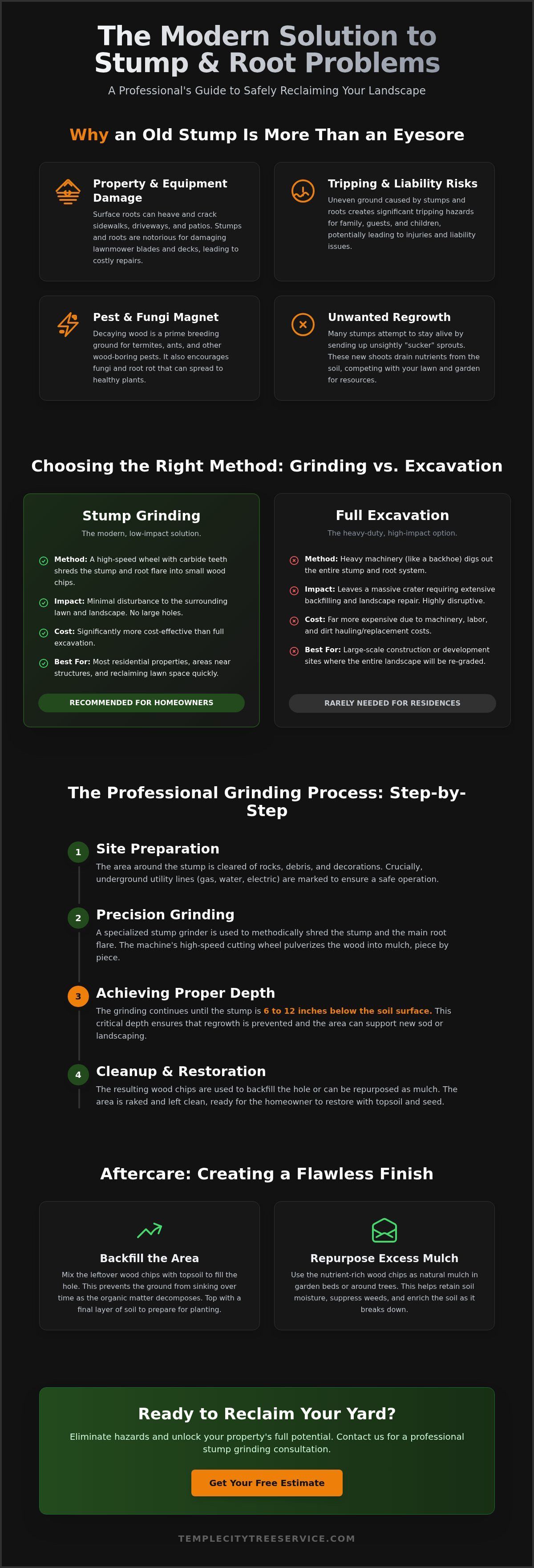
That old stump in your front yard might look harmless, but it's often a catalyst for property damage. When a tree is cut down, the life of the stump doesn't just stop; it begins a slow process of decay that invites a host of complications. For many homeowners, the primary concern is the physical obstruction. Have you ever tried to mow around a jagged stump or protruding surface roots? It's a recipe for expensive equipment repairs. Those thick, woody roots are notorious for dulling mower blades and even cracking mower decks, turning a simple weekend chore into a costly trip to the repair shop.
Beyond the equipment risks, aggressive surface roots are a major threat to your hardscaping. In Temple City, where many residential properties feature mature landscapes, these roots often extend far beyond the original tree canopy. They can exert enough pressure to heave sidewalks, crack driveways, and buckle patio stones. Addressing these issues early with professional tree stump and root grinding Temple City services prevents minor cracks from becoming major trip hazards or code violations. It's much easier to grind a root now than it is to replace a section of concrete later.
The Aesthetic and Safety Impact
Think about the square footage that stump currently occupies. Could it be a new garden bed, a level spot for a swing set, or a paved seating area? Removing the stump and its associated root flare reclaims that space for your family to enjoy. Safety is the other side of the coin. Stumps and surface roots are classic tripping hazards, especially for children or elderly guests. By smoothing out your terrain, you eliminate potential liability and instantly boost the real estate value of your home. A clean, level lawn looks cared for and professional.
Hidden Biological Risks
The dangers aren't just on the surface. A decaying stump is a prime breeding ground for fungi and root rot, which can eventually spread through the soil to your remaining healthy trees. Even more pressing is the threat of wood-boring pests. In Southern California, rotting stumps are a magnet for subterranean termites. These pests don't just stay in the yard; they often use the stump as a base of operations before migrating toward your home's foundation. To understand the mechanics of how we fix this, it helps to know what a stump grinder is and how it pulverizes wood to remove these biological magnets. Finally, many stumps will attempt to stay alive by sending up "sucker" growth. These small, unsightly sprouts are difficult to kill and will continue to drain nutrients from your soil until the root system is physically ground away.
Stump Grinding vs. Root Removal: Which Is Best for Your Yard?
Choosing between grinding and full extraction is a decision that impacts both your budget and your lawn's health. While both methods address the leftover remains of a tree, they function very differently. Stump grinding is a mechanical process where a high-speed wheel with carbide teeth literally shreds the wood into mulch. It's precise, efficient, and leaves the surrounding soil mostly undisturbed. In contrast, root removal is a form of heavy excavation. It involves digging out the entire subterranean system, which often requires a backhoe and leaves a massive crater in your yard. When homeowners search for tree stump and root grinding Temple City, they are usually looking for a way to restore their lawn's beauty without a massive excavation bill.
For most residential properties, grinding is the preferred low-impact solution. Why? Because it targets the problem areas, like the root flare and surface roots, without turning your backyard into a construction site. It's significantly more cost-effective than full extraction, which often incurs additional fees for machinery transport and extensive soil backfilling. Many property owners struggle with the hazards of overgrown tree roots that break through the surface and ruin turf. Grinding allows us to follow these specific roots and mulch them away, protecting your lawn equipment and preventing trips. If you're ready to clear your landscape, our team provides professional Stump Grinding to get the job done right.
When Grinding Is the Correct Choice
Grinding is the clear winner for established yards. If your stump is tucked in a tight corner near a fence or your home's foundation, a grinder can navigate those spaces with ease. It's also the best way to handle surface roots that have lifted sections of your turf. By preserving the existing soil structure, we ensure your yard recovers quickly. This method is the standard for tree stump and root grinding Temple City because it balances thoroughness with property protection. It's a surgical strike rather than a total demolition.
The Limits of Grinding
It's helpful to know the boundaries of the technology. A standard industrial grinder typically reaches between 6 and 12 inches below the soil line. This is more than enough for replanting grass or small shrubs. However, it does leave the deep vertical tap root in place. Over time, this wood naturally decays and enriches the soil. If you're planning to pour a concrete foundation or install a swimming pool exactly where the tree stood, you might need full excavation instead. For standard landscaping, though, grinding is almost always the superior choice.
Preparing for Tree Root Grinding in Temple City
Have you ever wondered what lies directly beneath that stubborn stump? Preparation is the most critical phase of any successful tree stump and root grinding Temple City project. Before the first tooth of the grinder touches wood, we must ensure the workspace is safe and clear of hidden obstructions. In California, the law requires you to contact 811 at least two working days before any grinding begins. This service marks the location of public utility lines, protecting you from the danger and expense of a severed gas or water main. Beyond the legal requirements, a little bit of legwork on your part ensures the job goes smoothly and quickly.
Start by clearing the immediate area of any large rocks, bricks, or decorative gravel. These hard materials can damage the carbide-tipped teeth of the grinder or become dangerous projectiles during the process. If you have potted plants or garden ornaments nearby, move them to a safe distance. It's also a great time to chat with your neighbors. While the process is efficient, it does generate noise and some dust. Letting them know about the temporary activity helps maintain those friendly neighborhood ties Temple City is known for.
Mapping Your Underground Infrastructure
Public utility markings only cover the lines owned by the city or utility companies. They don't account for your private irrigation systems. Many of our local neighborhoods feature older, complex plumbing layouts where PVC irrigation lines run directly through a tree's root zone. We recommend marking your sprinkler heads with small flags or paint. If you have landscape lighting or an invisible pet fence, those wires are often buried just a few inches deep and are easily caught by a grinder. Identifying these "private" lines ahead of time prevents the frustration of a broken sprinkler system after the stump is gone.
Site Access and Equipment Safety
How do we get the machine to the stump? Most professional-grade grinders require a minimum 36-inch gate clearance to access your backyard. If your side gate is narrower than this, we need to discuss alternative access points or specialized equipment. Once access is confirmed, please move any vehicles or patio furniture. The grinding process creates a significant amount of wood dust and small debris. While we use protective guards, moving your car prevents a layer of fine sawdust from settling on your paint. Finally, keep children and pets inside during the operation. Modern grinders are powerful machines, and maintaining a clear safety perimeter is our top priority for your family's protection.
The Step-by-Step Process of Professional Root Removal
What does the actual workday look like when the heavy equipment arrives? Professional tree stump and root grinding Temple City services aren't just about making the wood disappear; they're about precision engineering in your backyard. Once the machine is positioned, the operator engages the cutting wheel, which spins at high speeds. We start at the outer edge of the stump and work inward. It's a methodical, rhythmic process that ensures every inch of the wood is transformed into a useful byproduct. When you hire a team for tree stump and root grinding Temple City residents trust, you're investing in a process that is as much about the long-term health of your soil as it is about removing an eyesore.
You'll quickly notice that the volume of wood chips created is much larger than the original stump. This happens because the grinder introduces air and space as it breaks down the dense, solid wood. We often call this the "mulch mountain." A professional crew doesn't just leave a chaotic mess for you to deal with later. We manage these chips by backfilling the hole and raking the area to ensure it's safe and tidy before we pack up our gear. If you have a stubborn stump ready for transformation, contact us for professional Stump Grinding today.
Grinding the Main Stump
The operator uses lateral sweeping motions to shave the stump down layer by layer. It's fascinating to watch the carbide teeth reduce solid oak or pine into fine chips in a matter of minutes. Throughout this phase, we're constantly monitoring for hidden stones, old irrigation pipes, or even fence wire that might have been swallowed by the tree over the years. By the time we're finished with the main core, the "heart" of the stump is fully pulverized. We typically reach a depth of 6 to 12 inches below the soil line, which is the industry standard for allowing new turf or small shrubs to thrive in that spot.
Tackling the Problematic Roots
The job isn't truly finished once the stump is gone. We then "chase" the lateral surface roots that have been causing those mower bumps you've dealt with for years. This requires a delicate touch, especially when roots are growing right up against concrete walkways or your driveway. We use the grinder to shave these roots down without nicking your hardscaping. A final inspection ensures no "high spots" remain. This leaves you with a perfectly flat, mowable surface that looks like the tree was never there. It's this attention to detail that separates a quick grind from a professional landscape restoration.
Aftercare: How to Restore Your Lawn Post-Grinding
Once the dust settles and the machinery is loaded back onto the trailer, your yard enters the restoration phase. The result of tree stump and root grinding Temple City is a fresh start for your landscape, but it requires a few intentional steps to ensure the ground remains level and healthy. Many homeowners are surprised by the sheer volume of wood chips left behind after the process. While it might be tempting to just leave the pile where it is, doing so can lead to a "sinkhole" effect as the organic matter slowly decomposes over time. Proper aftercare ensures that your lawn recovery is as smooth as the grinding process itself.
The goal now is to transform that site from a construction zone back into a vibrant part of your garden. This involves more than just raking the surface. You need to manage the biology of the soil to prevent future issues like nitrogen depletion or localized settling. By taking a proactive approach to the site restoration, you protect the investment you've made in your property's curb appeal and safety. It's the final chapter in reclaiming your outdoor space.
Managing the Mulch and Soil
Why shouldn't you leave a pure mulch pile in the hole? Pure wood chips are incredibly high in carbon. As they break down, they actually pull nitrogen out of the surrounding soil, which can starve nearby grass or plants. We recommend removing about half of the excess chips to use as decorative mulch in other flower beds. For the hole itself, mix the remaining chips with high-quality topsoil to create a healthy planting medium. This mixture provides better structural stability. Once the hole is filled, tamp the soil down firmly to prevent future settling. Finish by top-dressing with a thin layer of soil and spreading grass seed for a seamless repair that eventually blends perfectly with the rest of your turf.
Replanting Considerations
If you're eager to see a new tree in the same spot, patience is your best friend. It's often wise to wait at least one full growing season before planting a large tree exactly where the old one stood. This allows the remaining deep root fragments to begin their natural decay process. To avoid "replant disease" or soil fatigue, try shifting the location of your new tree by at least three to five feet. This gives the new sapling a fresh pocket of nutrient-rich soil to establish its own root system. If you aren't sure how to proceed with your specific landscape goals, you can contact Temple City Tree Service for a professional site assessment. We can help you evaluate the soil condition and ensure your new landscape investment has the best chance of success. Finally, keep an eye on the area for any small "sucker" sprouts. While rare after a thorough tree stump and root grinding Temple City project, catching these signs early ensures your lawn stays pristine for years to come.
Reclaim Your Beautiful Temple City Landscape
Removing a stubborn stump is more than just a cosmetic upgrade; it's a vital step in protecting your property's foundation and hardscaping. By choosing professional tree stump and root grinding Temple City services, you eliminate tripping hazards and prevent wood-boring pests from settling near your home. We've seen how precision grinding allows for quick lawn restoration without the massive disruption of heavy excavation. It's the most efficient way to turn a backyard obstacle into a blank canvas for your next garden project.
Our expert team understands the specific utility layouts and soil conditions unique to our local neighborhoods. We use specialized equipment designed for precise root flare management, ensuring every job is handled with the care your property deserves. As a fully licensed and insured provider, we take pride in helping our neighbors maintain safe and stunning outdoor spaces. Don't let a decaying stump hold your yard back any longer. Get Your Free Stump and Root Grinding Estimate in Temple City and start your landscape transformation today. We look forward to helping you restore the beauty of your yard.
Frequently Asked Questions
How deep does stump and root grinding actually go?
Professional grinding typically reaches a depth of 6 to 12 inches below the surface. This depth is ideal for tree stump and root grinding Temple City projects because it allows enough space for topsoil and grass seed. While the deep vertical tap root remains, it will naturally decay over time without interfering with your lawn's health or appearance.
Will the tree roots grow back after they are ground down?
Most trees will not grow back once the main stump and root flare are ground down. The grinding process removes the tree's primary energy source and prevents it from sending nutrients to the rest of the system. While a few aggressive species might attempt to send up small sprouts from outlying roots, these are easily managed and rarely survive the loss of the main stump.
What happens to the wood chips after the grinding is finished?
The process generates a large volume of wood chips that remain on your property. We typically use these chips to backfill the newly created hole to prevent a trip hazard. Any extra mulch is excellent for your flower beds or around other trees to help retain moisture and suppress weeds in your garden.
Is it safe to grind a stump near my house foundation or a sidewalk?
It is very safe to grind stumps near foundations or sidewalks when handled by an expert. Our specialized machinery allows for precise control, meaning we can shave away roots without impacting the structural integrity of your concrete. This precision is why grinding is preferred over full excavation in established residential neighborhoods where space is limited.
Do I need to be home when the stump grinding service arrives?
You don't need to be present as long as our crew has clear access to the work area. We require a 36 inch clearance for our equipment and ask that pets and children remain indoors for safety. We can discuss all the details over the phone or via email to ensure the job is completed exactly to your specifications while you go about your day.
How much does tree root removal usually cost in Temple City?
The cost for tree stump and root grinding Temple City homeowners pay varies based on the stump's diameter and the complexity of the root system. Factors like the wood density and the proximity to buildings also play a role. We often offer discounts for properties with multiple stumps that need to be addressed in a single visit, making it more efficient to clear the entire yard at once.
How long does it take to grind a standard-sized stump?
A standard-sized stump usually takes between 30 minutes and two hours to grind completely. Hardwoods like oak take longer than softer woods like pine. The time also depends on how far we need to chase the surface roots to ensure your lawn is flat and safe for mowing without damaging your equipment.
Can I replant grass immediately after the roots are ground?
You can replant grass almost immediately, but the soil needs proper preparation first. It's best to mix the wood chips with fresh topsoil rather than planting directly into pure mulch. This ensures the new grass has the nitrogen it needs to grow thick and green without the soil settling into a dip later as the organic matter decomposes.